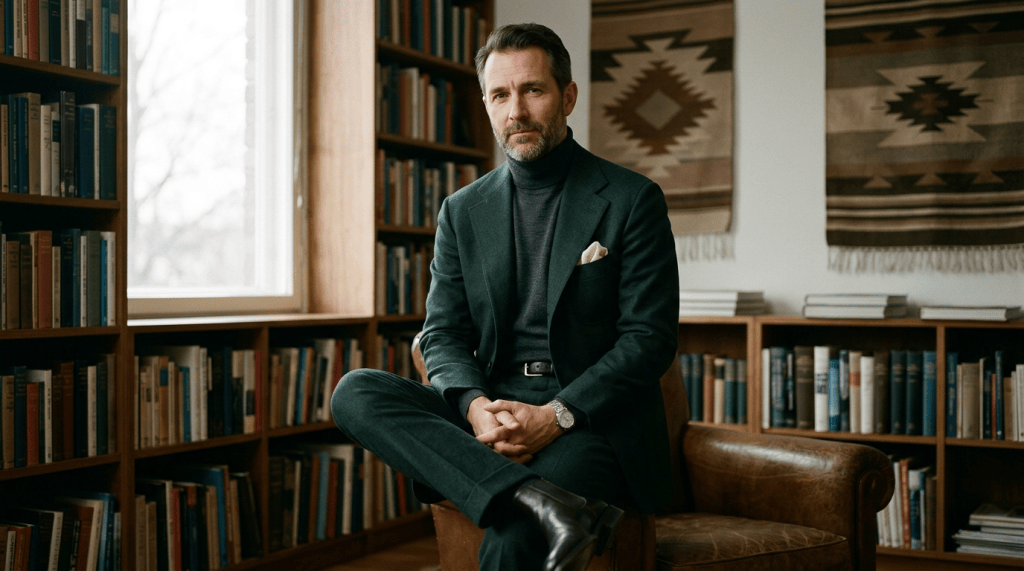
A reflection on modesty, symbolism and the quiet decisions behind getting dressed.
Getting dressed is rarely a philosophical act. You open a wardrobe, you pick something, you leave the house. But the reasons behind the choice are more layered than they look, and for a lot of people those reasons include faith.
Across cultures, what someone wears can signal religious commitment, mark a community, or express an idea about modesty. It can also just be a family habit carried on. Religious dress is never uniform either. Practices shift between denominations, countries and individuals, and the same garment can mean different things depending on who has it on.
A thobe has religious and cultural dimensions at once. So does a kippah. Distinctions matter here, but so does the fact that most people do not experience their own clothing as a neat category.
When belief meets clothing
For centuries, garments have carried religious identity. Within Islam, the thobe is worn across many communities, though it also has regional and cultural identities that sit apart from religion. Garments like the shalwar kameez work the same way, rooted in South Asian dress as much as in faith. For Sikhs who keep uncut hair, the turban is an expression of commitment, identity and equality, not a styling decision.
In some Orthodox Jewish communities, the kippah, tzitzit and particular traditions around hats and coats reflect observance alongside community affiliation and local history. Christian practice ranges just as widely, from denominations with clear expectations around dress to the majority of Christians whose clothes are indistinguishable from anyone else’s.
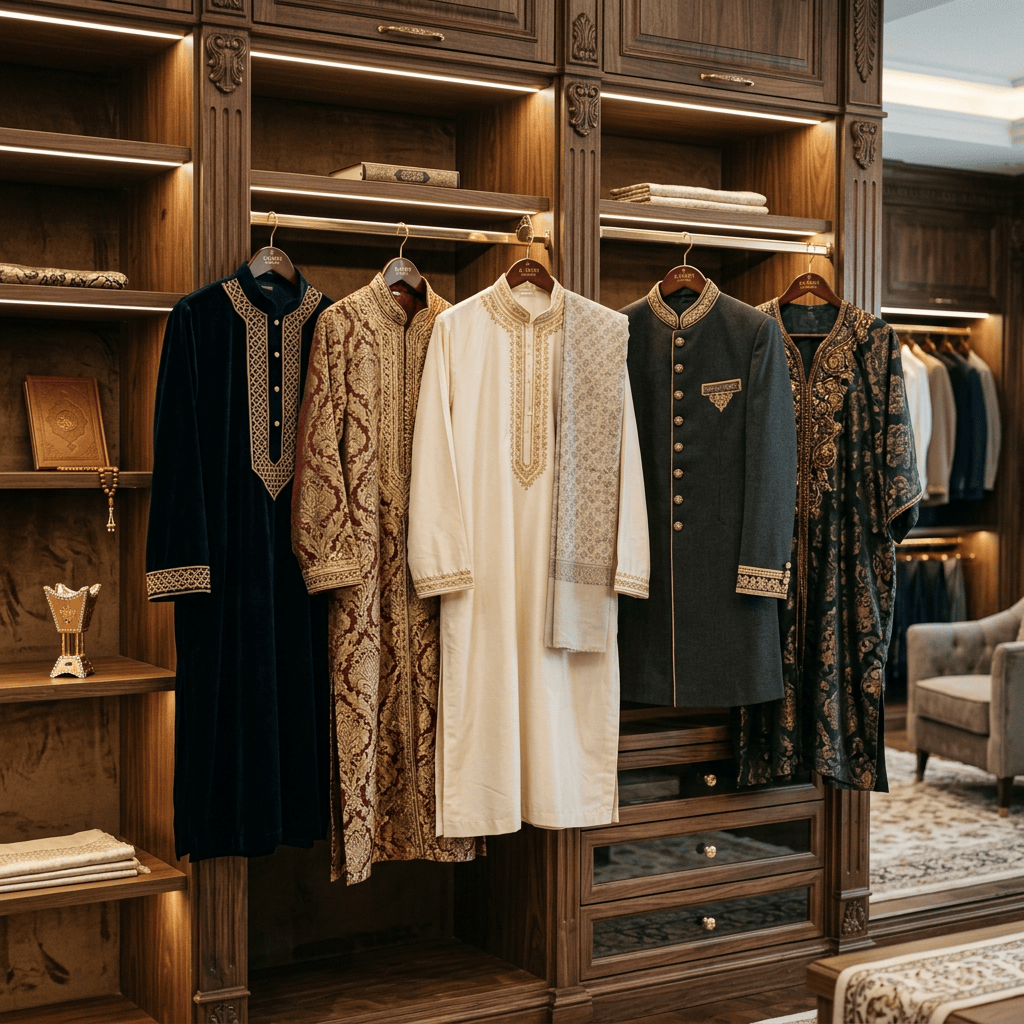
What’s worth holding onto is that shared faith does not produce a single way of dressing. Two people in the same congregation can interpret the same teaching very differently. Upbringing, culture, age and personal taste all get a vote.
Modesty, without assumptions
Modesty is where faith and contemporary fashion overlap most visibly, and where the most lazy assumptions get made. Its meaning varies by tradition and by person, but in practice it often shows up in how clothes are cut, layered and worn rather than in what is covered.
Longer silhouettes, considered layering, understated pieces: these can hold a set of values without requiring anyone to give up an interest in design. Contemporary menswear has plenty of room for this. Relaxed tailoring, structured outerwear, well-proportioned separates. None of it is inherently religious, and none of it requires revealing anything.
The confusion is that modesty gets treated as a synonym for minimalism. It isn’t. A modest wardrobe does not have to be beige, plain or free of ornament, and a minimalist wardrobe is not automatically modest. Those are two different things that happen to look similar on a rail.
Modesty, luxury and the question of motivation
Luxury fashion complicates things, and the complication is real rather than rhetorical. Luxury trades on exclusivity, craftsmanship and status. Faith tends to ask harder questions about humility, possessions and how much weight we put on appearances.
They are not automatically in conflict. You can care about how a garment is made and still hold to your values. For some people the answer is buying fewer, better things, which is a considered position rather than a compromise. For others, heavy branding and visible wealth raise questions that don’t resolve neatly, and the honest response is to leave them unresolved.
The distinction sits less in the price tag than in the reasoning. A cheap coat worn for the wrong reasons and an expensive one worn for the right reasons aren’t as far apart as they look.
Symbols, jewellery and the problem of borrowing
Faith also lives in the smaller details. A cross necklace, a pendant, a ring. These sit in an odd space between decoration and belief. Their aesthetic appeal travels well beyond the communities they come from, but their meaning stays with the people who wear them for a reason.
Designers have always drawn on historical dress, ceremonial clothing and spiritual motifs. Done with care, that’s a conversation between traditions. Done carelessly, a symbol becomes a motif, detached from the people who give it meaning. The gap between those two outcomes is usually research, credit and a bit of humility.
The same applies at the level of an individual outfit. You can’t reliably read someone’s beliefs off their clothes. A garment might signal religious practice, cultural heritage, family tradition, or nothing more than preference. Usually it’s several of those at once.
My own answers
Has faith or upbringing shaped how I dress? Not really, no. But I can see clearly how it shapes other people, and I think it’s made the rest of us a bit more understanding about how someone chooses to present themselves. Faith explains a lot of choices that might otherwise get read as eccentricity or statement.
Can dressing well and practising faith coexist? Yes, easily. How you present yourself gives away a bit of your personality before you’ve said a word. Turn up looking put together and people are warmer, doors open more readily. Turn up in something loud, or barely there, and a certain kind of judgement arrives before you’ve introduced yourself. None of that is fair, but it’s how rooms work. The better version of that observation is that comfort matters most, and faith is part of how some people get comfortable.
Does fashion put too much weight on appearance? Yes. With good reason, though. Appearance is a form of communication and people use it, consciously or not. The problem isn’t that we notice; it’s when noticing turns into a verdict on someone’s character or worth.
Dressing with intention
Personal style keeps shifting. What you wore at twenty doesn’t survive contact with thirty, and the beliefs underneath shift too, usually more slowly. Faith can be the continuity in that. It doesn’t stop you caring about clothes. It gives you a reason to care about them differently.
Fashion tells the world how we want to be seen. Faith can influence how we choose to see ourselves. The second is quieter, harder to photograph, and far more durable.
The most meaningful version of personal style probably isn’t wearing whatever looks current. It’s knowing why you reached for the thing you’re wearing. For some people, that answer starts with belief.


Leave a Reply