By the time the first model steps onto the runway, most of the work is already complete. The audience sees a carefully controlled sequence of clothes, movement, sound and light. Behind it lies a process of design decisions, fittings, rehearsals and last-minute adjustments.
For luxury menswear, those preparations can determine how a collection is understood. The length of a trouser, the movement of a coat and the placement of a shirt collar all contribute to the impression that reaches the audience.
The show may last only minutes. Creating those minutes can take months.
Turning a Collection Into a Show
Preparations begin long before a backstage space fills with garment rails. A collection needs a creative direction, which might develop through fabric research, archival references, photographs, sketches or conversations about how its intended wearer lives.
As designs become samples, ideas meet practical constraints. A fabric may behave differently from what was expected, or a silhouette may need several revisions before its proportions feel right.
The show develops alongside these decisions. Its location, casting, soundtrack and lighting can reinforce the collection’s mood, although different houses approach this process in different ways. Some favour theatrical storytelling; others create a restrained setting that keeps attention firmly on the clothes.
Casting the People Who Bring Clothes to Life
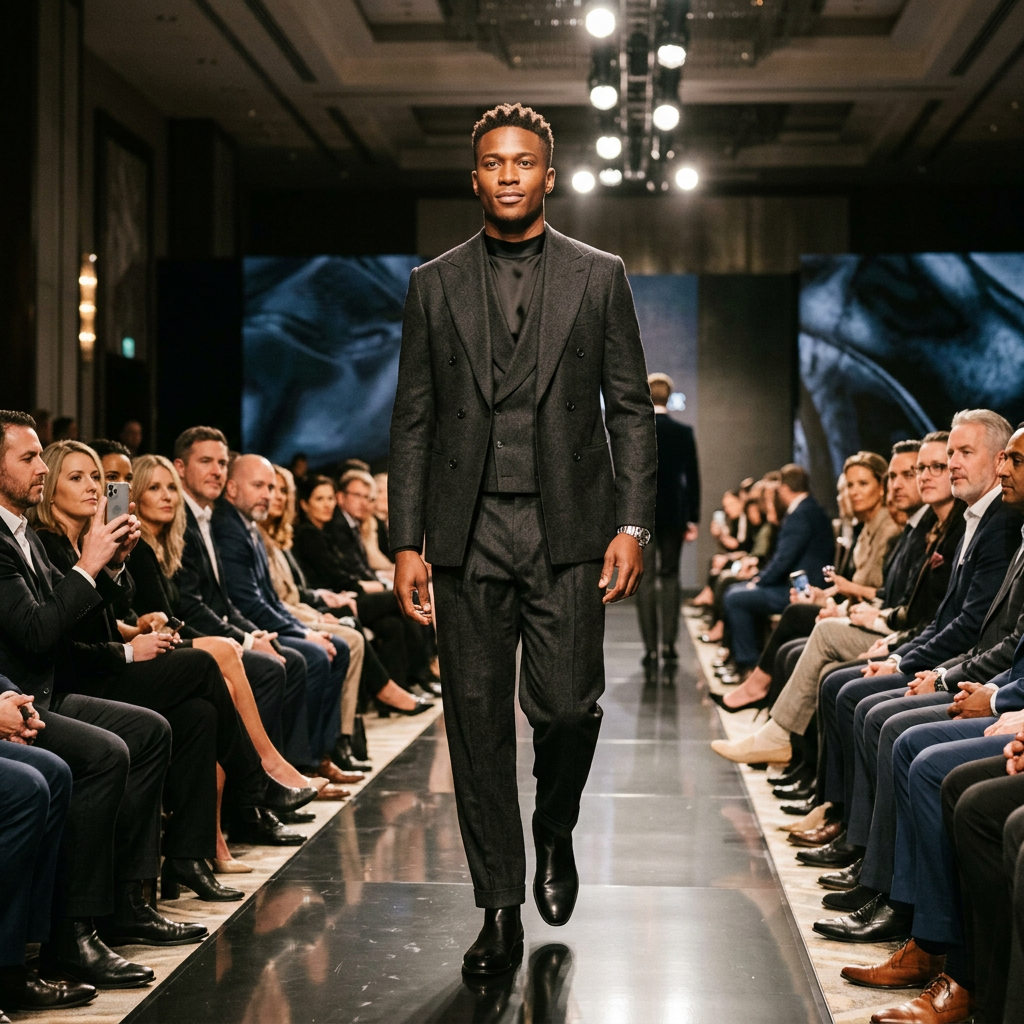
Models do more than display garments. Their walk, posture and presence affect how an outfit reads.
Casting therefore involves considering both individual looks and the collection as a whole. A sharply structured suit creates a different impression depending on how its wearer moves, while a fluid coat needs room to reveal its shape.
The aim is not necessarily uniformity. Differences between models can give a collection rhythm and character. What matters is how those individual presences work within the designer’s overall vision.
Why Fittings Matter
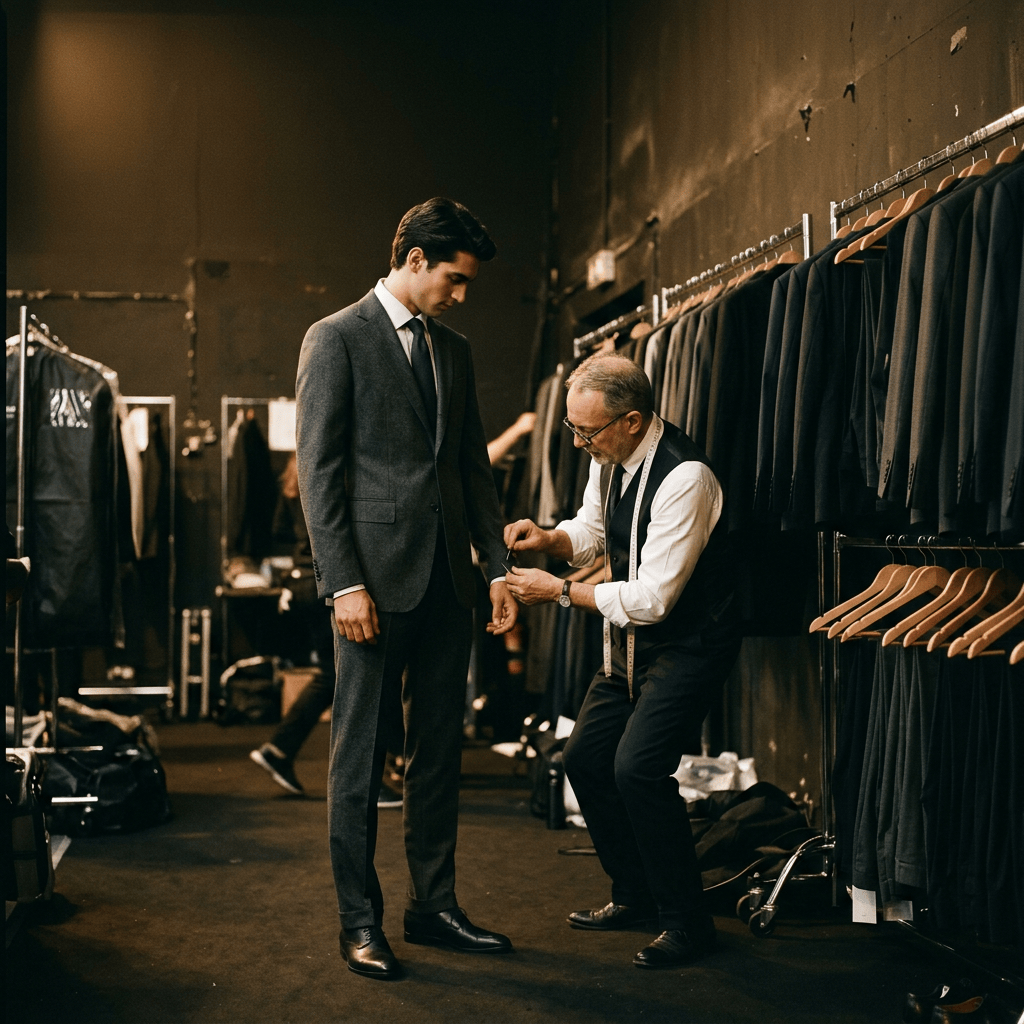
During fittings, the team sees how garments sit on the selected models rather than on a mannequin or a different fit model. This is where small adjustments can become particularly important.
In menswear, a trouser hem might need shortening to clear a shoe, a sleeve may require adjustment or a jacket might need attention across the shoulders. These changes influence not only appearance but also movement.
Runway dressing can involve temporary measures designed for a specific presentation. A garment that looks effortless from the audience may have been carefully secured or adjusted backstage. That does not mean every show piece is constructed or finished in exactly the same way as the version eventually offered for sale.
Styling the Complete Look
Once individual garments are ready, styling establishes how they work together. Shoes, jewellery, bags, belts and eyewear can shift an outfit’s meaning considerably.
A tailored suit worn with a fine knit suggests something different from the same suit worn with a formal shirt. An open neckline might soften a severe silhouette, while a substantial shoe can change the balance of wide trousers.
The running order matters too. The opening look introduces the collection’s language, while later outfits can develop, contrast or interrupt it. A show is not simply a rail of clothes presented at random; its sequence helps shape the audience’s understanding.
Building the Space
While the collection is being refined, production teams prepare the environment in which it will appear.
Lighting needs to work for the physical audience and for cameras. Sound must support the intended atmosphere. Seating, entrances, backstage access and technical equipment all need coordination.
The runway surface is also a practical consideration. Steps, narrow passages or unusual flooring can affect how models move and which footwear is suitable.
What feels like a simple room to a guest may be the result of extensive planning. Much of that work succeeds precisely when nobody notices it.
Rehearsing the Movement
A rehearsal allows the team to establish the route, spacing, pace and exit. Models need to know where to turn, whether to pause and how to respond to the person ahead.
The finale may require its own instructions, particularly if the cast returns together or follows a different route.
Rehearsals also reveal problems that are difficult to anticipate on paper. A hem might catch, a shoe may prove unstable or an accessory could interfere with movement. Identifying those issues before the audience arrives gives the team an opportunity to respond.
Backstage Before the Doors Open
As showtime approaches, backstage becomes a shared workspace for models, dressers, stylists, hair and makeup teams, production staff and the people responsible for the clothes.
Garments are checked, steamed or pressed as appropriate, and arranged so that each complete look can be identified. Reference photographs or look sheets may show dressers exactly how an outfit should appear, down to a fastening or sleeve position.
Grooming is similarly deliberate. Even an apparently natural finish can require preparation so that hair and skin remain consistent under strong lighting.
Where models have outfit changes, timing becomes especially important. Clothes must be accessible, the sequence understood and assistance available without obstructing other people working nearby.
The Final Checks
In the last moments, attention narrows to details. A collar is straightened, a mark is removed, a fastening is checked or a garment receives one final adjustment.
Meanwhile, front-of-house teams are managing arrivals and seating. Photographers prepare, guests find their places and production teams coordinate the start.
The apparent calm of the runway depends on this less visible coordination. A successful opening is not simply a model stepping forward; it is many people completing their responsibilities at the right moment.
Why the Preparation Matters
A fashion show is both a presentation of products and a proposal about how those products should be seen.
For luxury menswear, preparation makes subtle qualities legible. Careful styling draws attention to proportion. Movement reveals fabric. Lighting gives shape to texture. The setting places familiar garments within a new context.
Not every show needs spectacle to achieve this. Sometimes the strongest presentation is the one that removes distractions and allows the clothes to speak clearly.
Before the first look appears, the essential work has already happened: turning a collection of individual pieces into a coherent point of view.
THE HAUT – Fashion, Elevated.


Leave a Reply