Luxury once communicated status through a relatively familiar wardrobe: tailoring, polished leather shoes and discreet references understood by those who knew where to look. Streetwear challenged that language. Trainers became prized possessions, hoodies entered designer collections and a graphic T-shirt could carry as much cultural significance as a suit.
But the change went deeper than clothing. Streetwear reshaped how luxury brands release products, build desire and establish credibility. It helped shift the conversation from craftsmanship and heritage alone towards community, collaboration and cultural relevance.
For menswear, the result was not simply a more casual wardrobe. It was a different understanding of what could make fashion valuable.
From Subculture to Cultural Authority
Streetwear has multiple roots, including skateboarding, hip-hop, surf culture and Japanese street fashion. These scenes developed their own ways of signalling belonging through clothes, often outside the institutions that traditionally defined luxury.
A label’s significance could depend on who wore it, where it was stocked or what it represented within a community. Knowing the story behind a graphic or recognising an obscure collaboration became a form of cultural knowledge.
Luxury already operated through its own codes of recognition. Streetwear demonstrated that those codes did not have to come from an established fashion house. A relatively young label could possess considerable authority if its audience believed in it.
As luxury embraced streetwear, it was therefore borrowing more than silhouettes. It was engaging with communities capable of creating desirability on their own terms.
When the Hoodie Became a Luxury Product
Streetwear helped loosen the connection between luxury and formality. A garment no longer needed to resemble traditional occasion wear to justify a place in a designer collection.
Hoodies, sweatshirts, trainers and track trousers became vehicles for experimentation in proportion, fabrication and branding. Luxury menswear increasingly offered clothes for everyday visibility rather than only professional or ceremonial settings.
Louis Vuitton’s 2017 collaboration with Supreme made this shift particularly visible. The meeting of monogrammed luxury and skate-associated branding demonstrated how powerful the overlap between their audiences could be.
Virgil Abloh’s subsequent appointment as artistic director of Louis Vuitton menswear brought a designer whose practice connected streetwear, music and luxury into a major institutional role. His work challenged the idea that these worlds needed to remain separate.
Yet an expensive hoodie also raised a lasting question: what exactly was the customer paying for? Sometimes the answer involved material and construction. In other cases, much of the value lay in branding, cultural association and access.
Drops Changed the Shopping Experience
Streetwear helped popularise the drop as a defining retail event. Rather than allowing a product to remain quietly available, a tightly timed release could turn buying into an occasion.
Anticipation, queues and the possibility of missing out became part of the experience. Luxury adopted versions of this approach through limited releases, exclusive capsules and collaborations designed to command attention.
Scarcity was hardly new to luxury. What streetwear contributed was a faster, more publicly participatory expression of it. Ownership could demonstrate not only spending power but also awareness, persistence or access.
This model could create genuine excitement. It could also encourage rushed decisions, with customers buying because an item might disappear rather than because it belonged in their wardrobe.
Collaboration Became a Cultural Language
Streetwear helped make collaboration central to fashion’s storytelling. Bringing two names together offered more than a combined logo: it could introduce different audiences, references and creative practices.
For luxury houses, collaborations offered opportunities to connect heritage with contemporary culture. For streetwear labels, they could provide access to specialist production and a wider platform.
The strongest partnerships produced a meaningful exchange. The weakest relied on recognition alone, treating the presence of two familiar names as sufficient justification for a product.
That distinction remains important when assessing collaborative luxury. A compelling release should offer something beyond the announcement itself, whether through design, construction or a thoughtful connection between the collaborators.
Trainers Redefined Aspiration
Few products illustrate streetwear’s influence as clearly as trainers. Their appeal could combine everyday usefulness with collecting, nostalgia and an intricate knowledge of releases.
Luxury brands approached the category through different routes, from restrained leather styles to exaggerated soles and conspicuous branding. Trainers became central to many luxury wardrobes rather than merely an informal alternative to “proper” shoes.
For menswear, this expanded the possibilities of dressing. Tailoring could sit alongside sportswear, and the contrast between formal and casual became a deliberate styling choice.
However, a luxury label does not automatically make a trainer more comfortable, durable or technically accomplished. As with any purchase, the product deserves attention beyond its status.
A Freer Approach to Menswear
Streetwear helped broaden the silhouettes available to men. Oversized tops, wider trousers, layered proportions and cross-body bags challenged a narrow view of masculine polish.
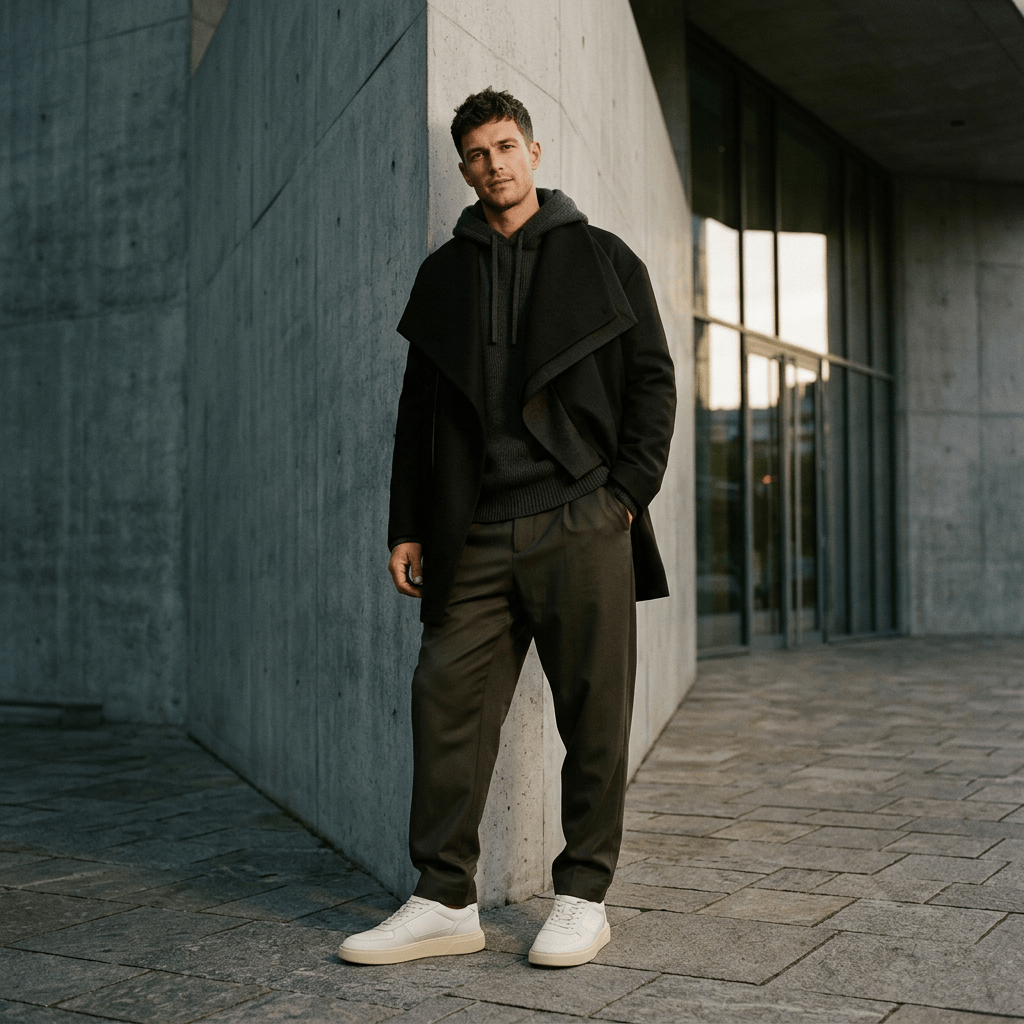
It also encouraged a more flexible relationship between categories. A coat could be worn over a hoodie; tailored trousers could work with trainers; a technical jacket could sit beside fine knitwear.
Streetwear was not solely responsible for these changes. Sportswear, music, shifting workplace expectations and designers working across different traditions also contributed. Its particular influence lay in making the mixture culturally persuasive.
The most successful combinations were not necessarily the most conspicuous. They used contrast thoughtfully, allowing relaxed pieces and more structured garments to give each other a different character.
Who Benefits When Culture Becomes Luxury?
Streetwear’s relationship with luxury also raises questions about credit and access. Styles developed within Black communities, skate scenes and other cultural networks can acquire significantly higher prices when reinterpreted by prestigious brands.
The issue is not that creative exchange should stop. Fashion has always developed through exchange. The question is whether the people and communities behind influential ideas receive recognition, opportunity and meaningful participation.
Luxury’s embrace of streetwear did create space for designers and perspectives that established institutions had overlooked. But visibility does not automatically mean that influence and financial reward are shared equally.
Understanding the cultural history of a garment makes for a more informed relationship with it than treating every reference as simply another trend.
What Streetwear Left Behind
Streetwear did not eliminate tailoring or turn all luxury into casualwear. Its more enduring achievement was to expand the definition of luxury and challenge who had the authority to shape it.
It showed that desirability could emerge from a community as well as a fashion house, that an everyday garment could carry considerable meaning and that cultural fluency could rival conventional prestige.
For the wearer, the most useful legacy is freedom. A considered wardrobe can include tailoring, trainers, technical clothing and expressive graphics without requiring allegiance to one category.
Streetwear changed luxury most profoundly by demonstrating that value is not determined by formality. The remaining challenge is to distinguish genuine design and cultural substance from hype alone.
THE HAUT – Fashion, Elevated.


Leave a Reply